


Why the Advantages of Digital Wallet vs Credit Card Matter Right Now
The advantages of digital wallet vs credit card payments have never been more relevant — over 3.4 billion people worldwide now use digital wallets, and that number is expected to hit 5 billion by 2026.
Here is a quick breakdown of how digital wallets stack up against physical credit cards:
| Feature | Digital Wallet | Physical Credit Card |
|---|---|---|
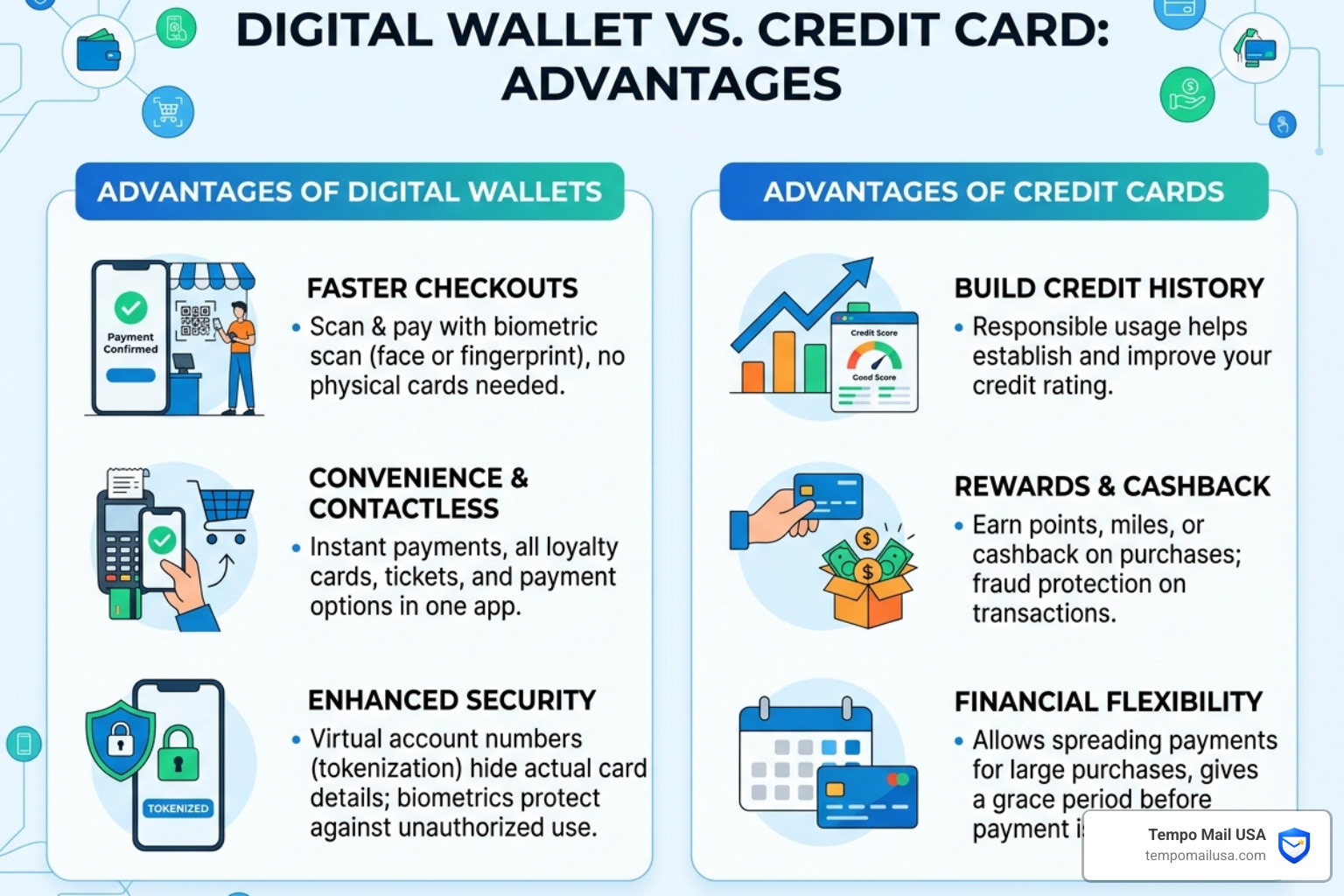
| Security | Tokenization, biometrics, encryption | Chip + PIN, magnetic stripe (skimmable) |
| Speed | Tap and done in seconds | Swipe, insert, or tap |
| Fraud protection | No real card number shared | Card number exposed at point of sale |
| Merchant acceptance | ~88% of merchants | ~94% of merchants |
| Lost/stolen risk | Locked by biometrics, remotely wipeable | Immediately usable by a thief |
| Rewards | Full rewards retained (sometimes bonus) | Full rewards |
| P2P payments | Yes (Venmo, Zelle, Cash App) | No |
| Card management | Multiple cards in one app | One physical card per account |
The short answer: digital wallets win on security and convenience, while physical credit cards still have a slight edge on universal acceptance.
But the full picture is more nuanced — and worth understanding before you decide which to reach for at checkout.
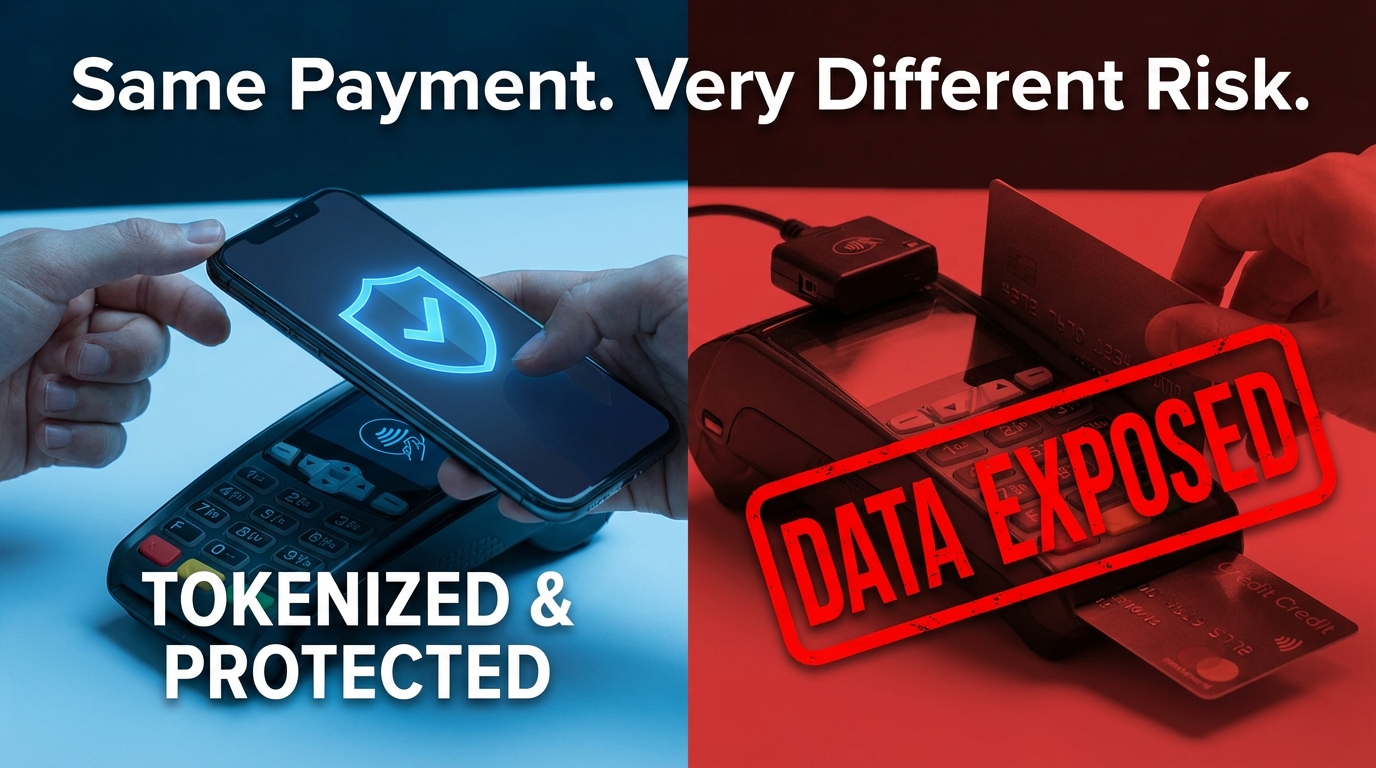
Businesses are expected to lose $130 billion to credit card fraud between 2018 and 2023. Meanwhile, digital wallets never share your actual card number with merchants. That single difference changes everything about how your financial data is exposed.
The Core Advantages of Digital Wallet vs Credit Card Usage
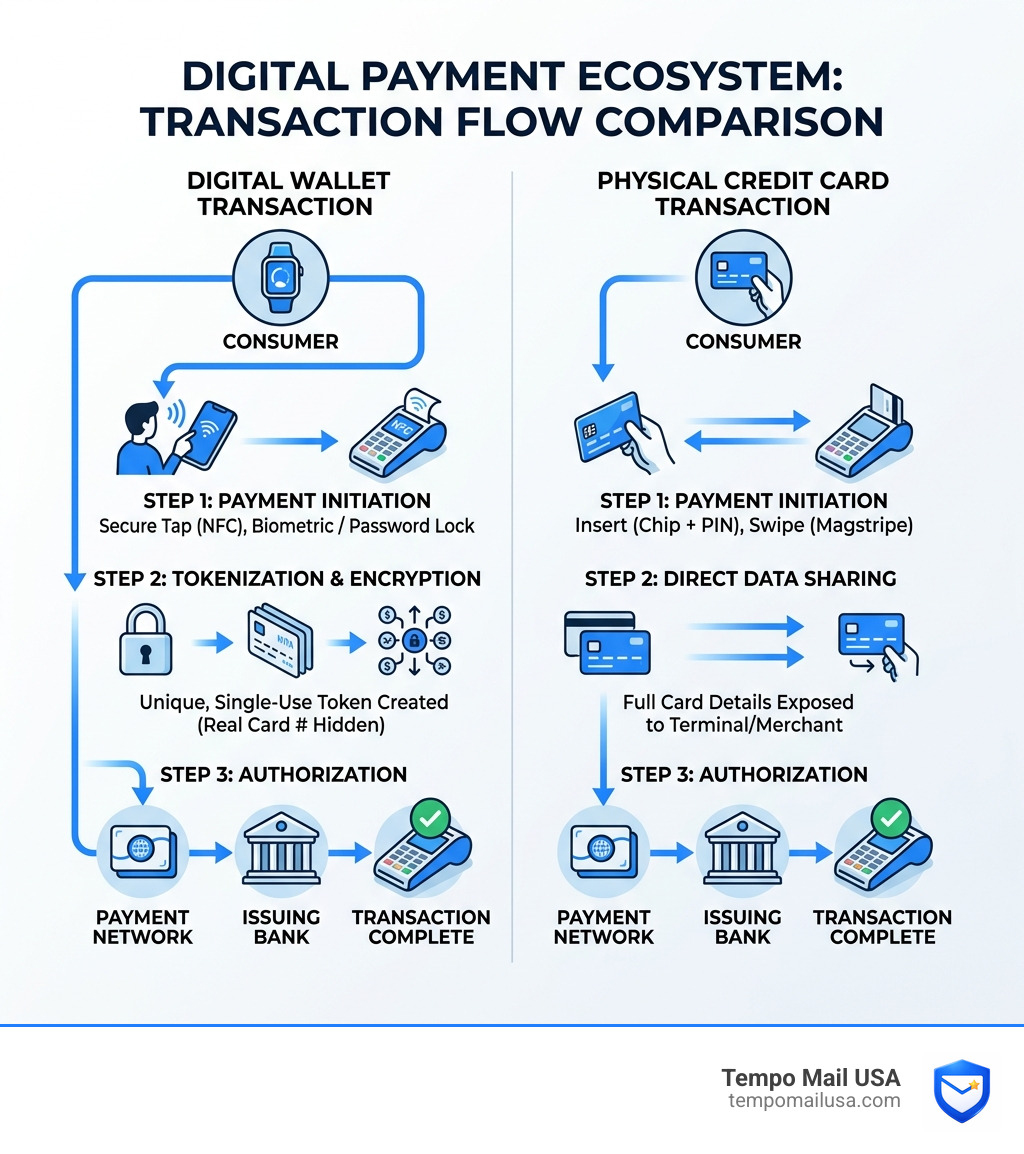
When we look at the evolution of money, we see a clear shift from physical bulk to digital precision. A digital wallet is essentially an application on your smartphone or smartwatch that stores virtual versions of your credit and debit cards. While a physical credit card relies on a plastic slab with an embedded chip or magnetic stripe, the digital wallet acts as a high-tech intermediary.
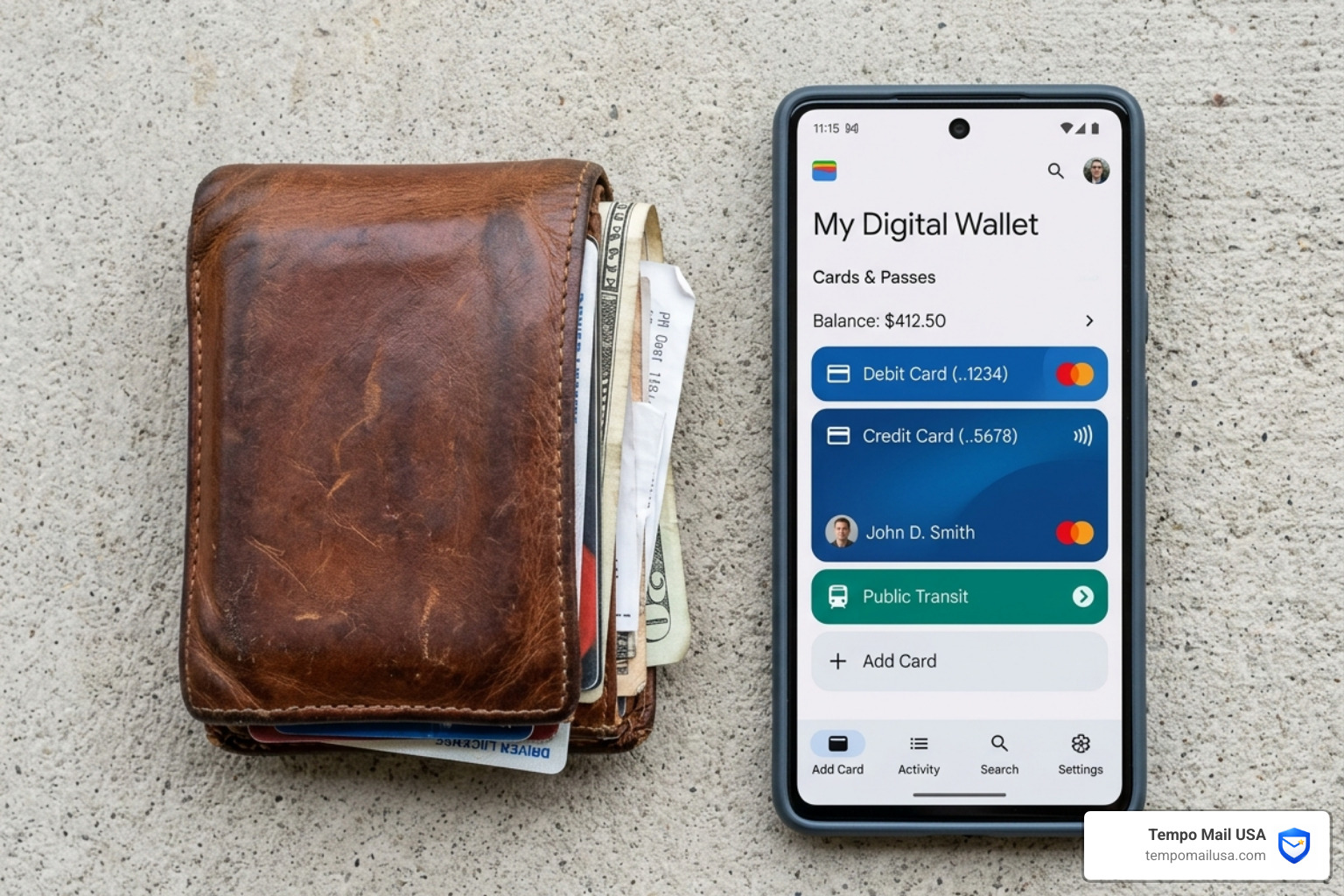
One of the primary advantages of digital wallet vs credit card usage is the reduction of "wallet bulge." We’ve all seen the "George Costanza" wallet—overflowing with receipts, loyalty cards, and plastic. Digital wallets consolidate these into a single interface. However, the real winner isn't just aesthetics; it's the underlying Near Field Communication (NFC) technology. This allows for a secure, encrypted handshake between your device and the payment terminal, ensuring your data remains private.
To truly protect your financial life, you must look beyond the checkout counter. Utilizing identity theft protection services and credit monitoring software is essential in an era where data breaches are common. While digital wallets secure the transaction, these enterprise-grade tools monitor the integrity of your identity across the dark web and credit bureaus.
Security Advantages of Digital Wallet vs Credit Card Systems
If you are worried about hackers, the digital wallet is your best friend. Traditional credit cards are vulnerable to "skimming"—where thieves place devices on gas pumps or ATMs to clone your magnetic stripe. Digital wallets are effectively "unskimmable."
Why? Because of tokenization. When you use a digital wallet, your actual 16-digit card number is never transmitted to the merchant. Instead, a random, one-time "token" is sent. Even if a hacker breaches the merchant’s database later, they only find useless tokens, not your financial keys. According to research on how digital wallets are safer than physical cards, this layer of abstraction is a game-changer for fraud prevention.
Furthermore, digital wallets offer:
- Biometric Authentication: Your physical card doesn't know who is holding it. A digital wallet requires a fingerprint or facial scan.
- Advanced Malware Protection: Modern smartphones have "secure elements"—isolated hardware chips that protect payment data from the rest of the phone's software.
- Two-Factor Authentication (2FA): Most wallets require an extra step of verification for high-value purchases.
Convenience Advantages of Digital Wallet vs Credit Card Payments
Speed is the currency of the modern world. We have all stood behind someone fumbling through a purse to find the right card. With a digital wallet, you simply double-click a button and tap. It is consistently faster than waiting for a chip reader to process a physical card.
Beyond the checkout line, the convenience extends to Peer-to-Peer (P2P) transfers. Apps like Venmo or PayPal allow us to split dinner checks or pay rent instantly—something a physical credit card simply cannot do. Additionally, many users find that switching to a digital wallet allows for better record-keeping. Transactions are logged in real-time with geographic data, making it easier to track spending.
For business owners, integrating these payments with secure cloud storage for business ensures that digital receipts are archived and accessible for tax season without the need for shoeboxes full of paper.
Protecting Your Financial Data with Enterprise VPN Solutions and Cybersecurity Insurance
While the advantages of digital wallet vs credit card systems are clear, they are not a silver bullet. Your digital footprint is still a target. When you access your banking apps or digital wallets over public Wi-Fi—like at a coffee shop or airport—you are exposing your traffic to potential "man-in-the-middle" attacks.
This is why we highly recommend implementing enterprise VPN solutions. A VPN creates an encrypted tunnel for your data, ensuring that even if the Wi-Fi network is compromised, your financial credentials remain invisible to prying eyes. For those managing significant assets or business accounts, cybersecurity insurance provides a final safety net, covering losses from sophisticated social engineering or network breaches.
Data privacy compliance isn't just for big corporations; it’s a personal responsibility. By using remote device locking features, you can ensure that if your phone is stolen, your digital wallet is wiped before a thief can even try to bypass the biometrics. This is a level of control you simply don't have with a lost physical card, which requires a frantic phone call to the bank to cancel. As noted in the guide on why a digital wallet is a smart move, the ability to manage your risk dynamically is a massive financial advantage.
Preventing Phishing with Disposable Email Infrastructure
One of the greatest threats to your financial security isn't a physical thief—it's a phishing email. Hackers often send deceptive messages appearing to be from your bank or digital wallet provider, tricking you into entering your login credentials on a fake site. Once they have your "Personally Identifiable Information" (PII), they can bypass even the best security.
This is where Tempo Mail USA becomes your most powerful firewall. By using our temporary email aliases, you can sign up for loyalty programs, newsletters, or new financial apps without ever revealing your real, primary email address.
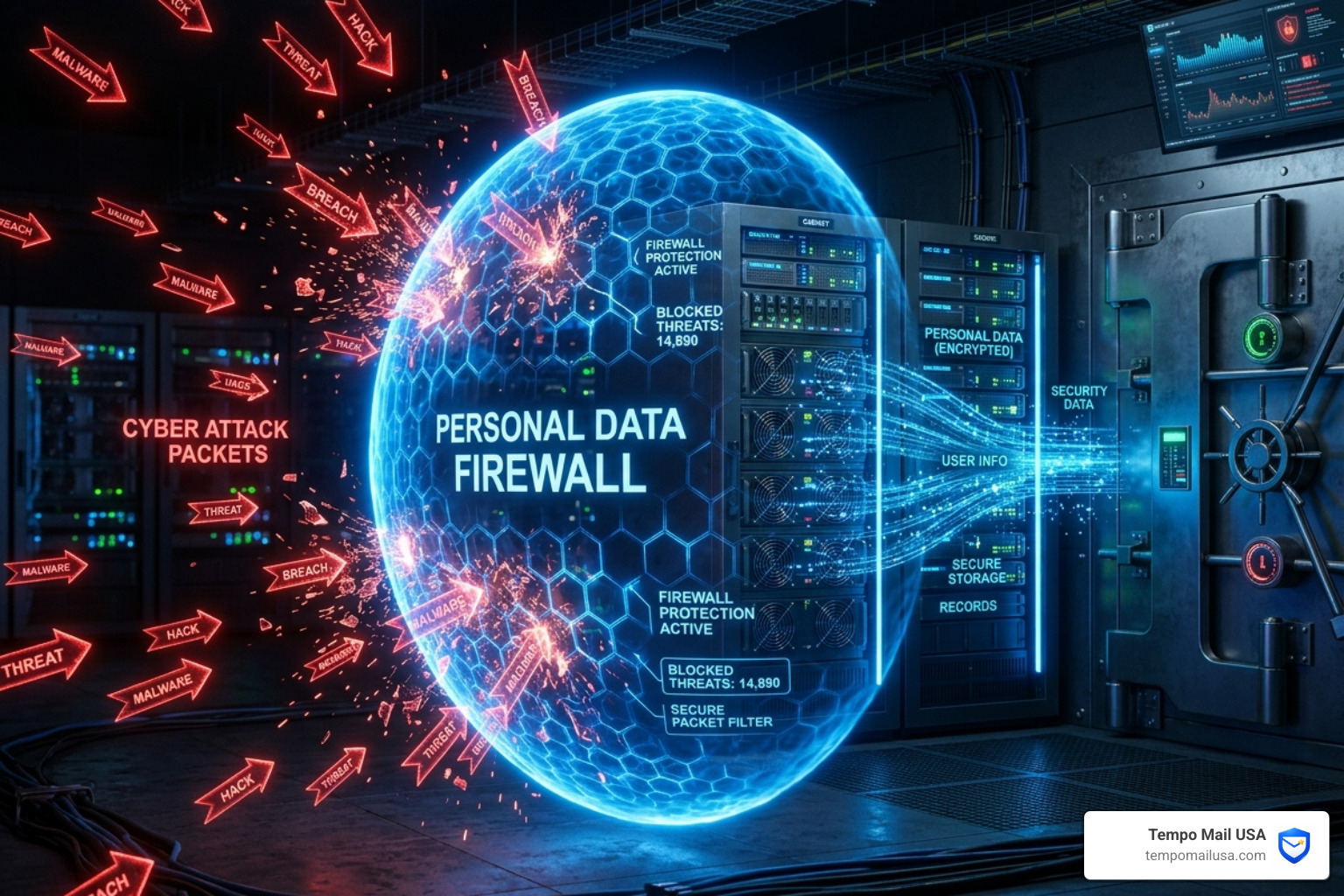
How Tempo Mail USA protects you:
- Identity Proxying: We act as a secure buffer between you and the internet.
- Spam Blocking: If a merchant's database is leaked, the hackers only get a temporary alias that you can delete instantly.
- Phishing Prevention: Since your real email isn't on file, any "urgent" bank alerts sent to your primary inbox that didn't come through your alias are immediate red flags for fraud.
- Data Breach Mitigation: By compartmentalizing your online presence, a breach at one site doesn't lead to a total compromise of your financial life.
We believe that secure identity proxying is the future of financial privacy. Before you link your credit card to a new online service, generate a temporary email at tempomailusa.com. It is the ultimate tool for anonymous financial sign-ups and blocking malicious data payloads.
| Security Layer | Purpose | Recommended Solution |
|---|---|---|
| Email Privacy | Block tracking and phishing | Tempo Mail USA |
| Network Security | Encrypt public Wi-Fi traffic | Enterprise VPN Solutions |
| Device Security | Protect physical access | Biometrics & Remote Wipe |
| Transaction Security | Mask card numbers | Digital Wallet Tokenization |
Frequently Asked Questions about Digital Wallets and Credit Cards
Are digital wallets safer than physical credit cards?
Yes, digital wallets are significantly more secure. They utilize tokenization, which replaces your actual credit card number with a unique, encrypted token for every transaction. This means the merchant never sees or stores your real card details. Additionally, digital wallets require biometric authentication (like FaceID or a fingerprint), whereas a stolen physical card can often be used for "tap" payments or online purchases without any verification.
Can I still earn rewards when using a digital wallet?
Absolutely. You retain 100% of your original credit card perks, including cash back, airline miles, and travel points. In fact, some credit card issuers offer additional bonus rewards specifically for using contactless mobile payments to encourage adoption. You can also store your loyalty and membership cards in the same app to ensure you never miss a point at checkout.
What happens if my phone battery dies or I lose my device?
If your battery dies, your digital wallet becomes inaccessible, which is why we recommend carrying one physical "backup" card. However, if you lose your device, your financial data is much safer than in a lost physical wallet. Because your wallet is locked behind biometrics, a thief cannot use it. You can also use "Find My Device" features to remotely wipe all payment information instantly.
Do I need identity theft protection services if I use a digital wallet?
Yes. While digital wallets secure the point of sale, they do not protect you from large-scale data breaches at the corporate level or from sophisticated identity theft schemes. Identity theft protection services monitor your credit reports and the dark web for your SSN and other PII, providing a comprehensive safety net that a digital wallet alone cannot offer.
Conclusion
The debate over the advantages of digital wallet vs credit card usage is quickly settling in favor of the digital side. While physical cards offer the comfort of universal acceptance—especially in rural areas or at older terminals—the security and convenience of digital wallets are unmatched.
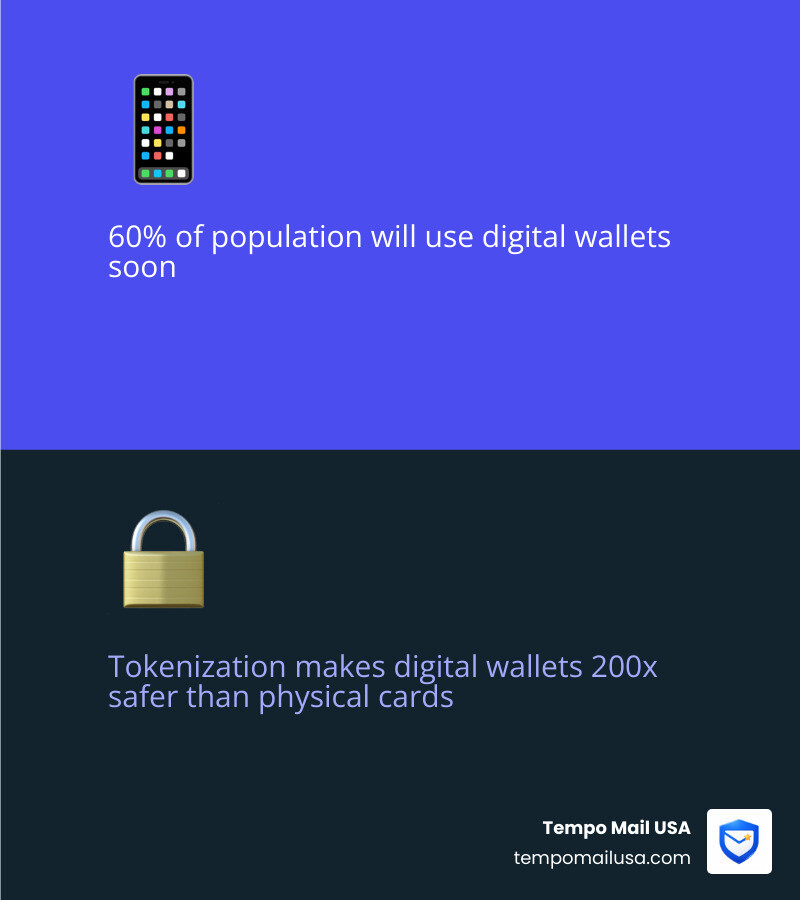
As we move toward a world where 60% of the population will rely on these tools, the best strategy is a hybrid one. Use your digital wallet for 90% of your daily transactions to take advantage of tokenization and speed, but keep a physical card tucked away for emergencies.
Most importantly, your digital wallet is only as secure as the information you share online. Protecting your PII with Tempo Mail USA and securing your connection with enterprise VPN solutions are the final steps in future-proofing your finances. By combining the best digital wallet features with elite cybersecurity habits, you can navigate the digital transformation with total confidence and financial sovereignty.