


Why Protecting Your Data Has Never Been More Critical
Prevent data breaches by implementing a multi-layered security strategy combining technical defenses with human awareness. Between March 2022 and March 2023, the average data breach cost a U.S. organization $9.5 million in fines, legal fees, and lost reputation.
Quick Actions to Prevent Data Breaches:
- Enable MFA on all accounts and systems.
- Encrypt sensitive data at rest and in transit.
- Train employees on phishing and data handling.
- Automate software updates with patch management.
- Implement access controls using zero trust principles.
- Monitor activity to detect threats early.
- Test incident response plans annually.
- Backup data using the 3-2-1 rule.
Major organizations like Yahoo, Equifax, and First American Financial have suffered massive breaches, proving that no company is immune. Most breaches stem from phishing, ransomware, or insider threats, but they are largely preventable. This guide shows you how to identify vulnerabilities and build defenses that work for any organization.
Understanding the High Cost of Vulnerability
Data breaches are crises that can cripple organizations. Understanding how they occur is the first step to prevent data breaches.
Common Causes of Data Breaches
- Phishing: Attackers use sophisticated emails to trick employees into revealing credentials or downloading malware. A single click can compromise an entire network.
- Ransomware: This malware encrypts files and demands payment. Attackers often exfiltrate data first, threatening to leak it if the ransom isn't paid.
- Insider Threats: This includes both malicious intent and accidental exposure, such as an employee losing an unencrypted laptop containing sensitive documents.
- Software Vulnerabilities: Unpatched software is a primary entry point. The Equifax breach, affecting 153 million people, was caused by an unpatched vulnerability.
- Configuration Errors: Simple mistakes, like leaving a database exposed without a password, led to the exposure of 419 million Facebook users’ account IDs.
The Devastating Consequences
- Financial Loss: U.S. organizations face average costs of $9.5 million per breach, including forensic investigations, legal fees, and regulatory fines.
- Reputational Damage: Trust is fragile. The Yahoo breaches, affecting 1.5 billion accounts, severely damaged the brand's public perception.
- Identity Theft: Stolen PII like Social Security numbers can lead to fraudulent purchases and ruined credit ratings for individuals.
- Legal Fines: Regulations like HIPAA and GDPR carry heavy penalties for non-compliance following a breach.
- Operational Disruption: Breaches cause significant downtime and productivity loss.
Essential Steps to Prevent Data Breaches
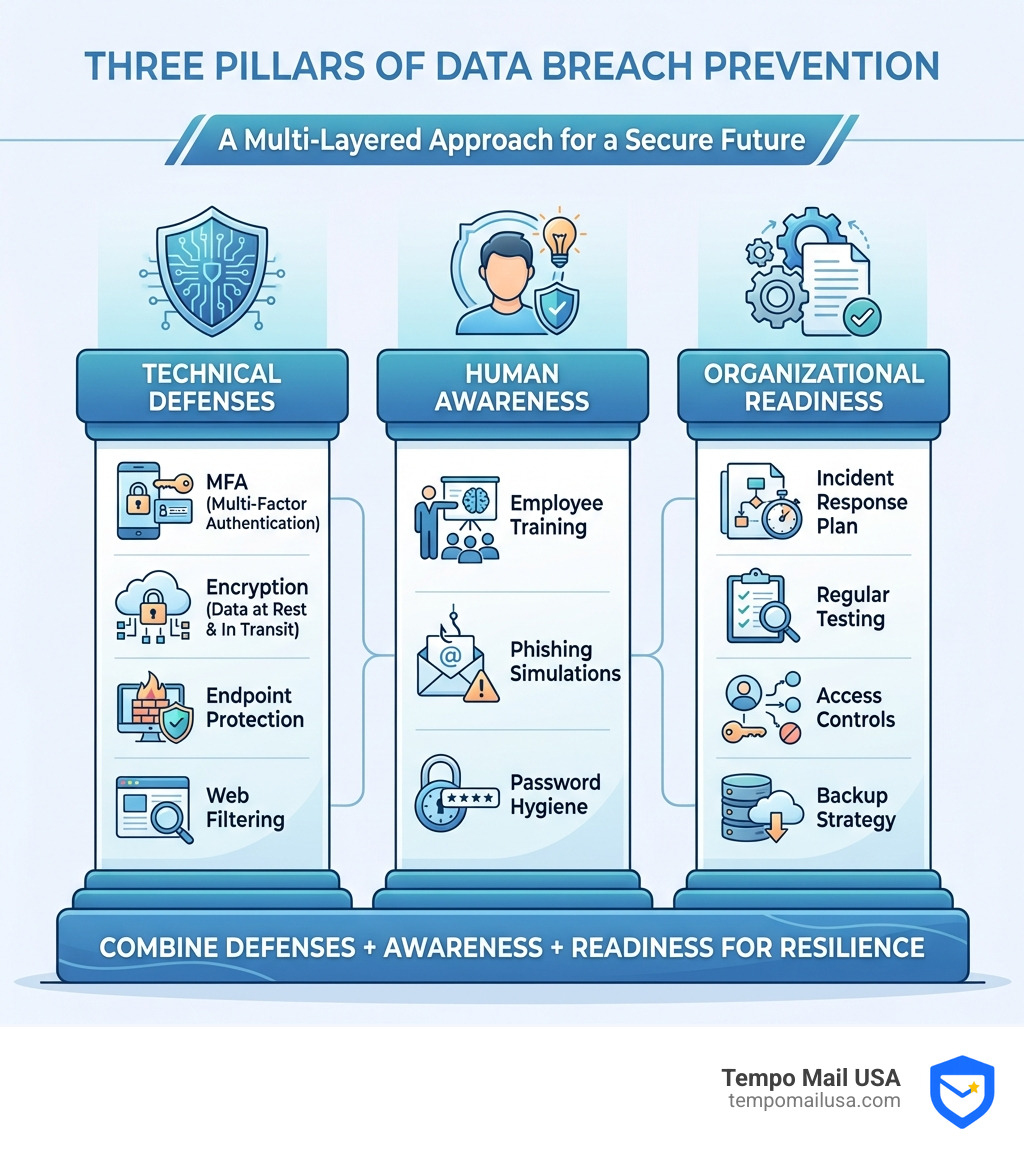
To prevent data breaches, you must build a comprehensive security foundation. The goal is to reduce your attack surface, limit the blast radius of any compromise, and make it significantly harder for attackers to turn one weakness into a full-scale incident.
Identify and Protect Your Assets
- Asset Inventory: Create a detailed list of all servers, databases, endpoints, SaaS tools, and third-party integrations. Include where sensitive data lives (PII, financial records, customer support tickets, HR systems) and who can access it.
- Data Classification: Label data by sensitivity (public, internal, confidential, regulated) so teams know what requires encryption, logging, approvals, and stricter sharing rules. Clear classification also helps you scope breach notifications accurately if an incident occurs.
- Risk Assessment: Identify potential threats specific to your environment (remote workforce, contractors, cloud storage, legacy apps) and prioritize protecting your most valuable data. Revisit risk assessments after major changes like mergers, new vendors, or new product launches.
- Data Encryption: Use strong algorithms like AES-256 to encrypt data both at rest and in transit. Ensure TLS is enforced for web apps and internal services, and rotate keys and certificates on a defined schedule.
- Multi-Factor Authentication (MFA): Require two or more forms of verification for all system access, especially email, VPN, cloud consoles, and administrative panels. Wherever possible, prefer phishing-resistant MFA for high-privilege roles.
- Access Controls: Use the principle of least privilege and role-based access controls (RBAC) to limit data exposure. Regularly review access lists, remove stale accounts, and enforce separation of duties for sensitive workflows like payroll or vendor payments.
- Physical Security: Secure data centers and workstations with controlled access and surveillance. For laptops and mobile devices, require full-disk encryption and enable remote wipe in case equipment is lost or stolen.
- Email Privacy: Email is a major attack vector. Tempo Mail USA provides identity proxying, generating secure email aliases that act as a firewall for your PII. Learn more about how we can help with email privacy and cybersecurity.
Multi-Layered Security and Software Updates
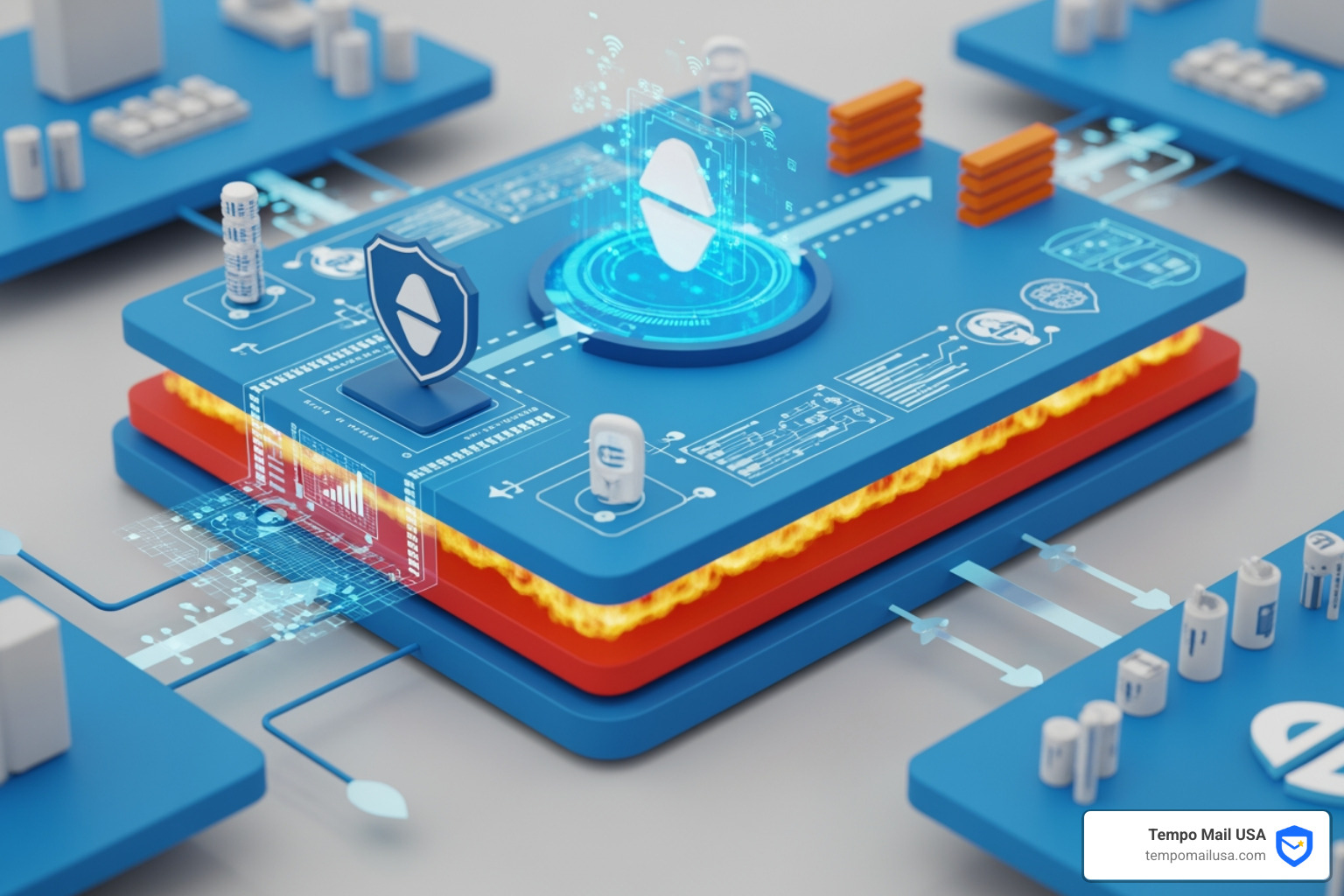
- Zero Trust Architecture: Never trust, always verify every user and device, regardless of location. Combine strong identity controls with continuous device posture checks.
- Network Segmentation: Isolate sensitive data into smaller segments to prevent lateral movement by attackers. Separate user networks from servers, keep administrative interfaces restricted, and limit east-west traffic.
- 3-2-1 Backup Rule: Keep 3 copies of data, on 2 different media types, with 1 copy offsite. Protect backups from ransomware by restricting access and keeping at least one copy logically isolated from production credentials.
- Patch Management: Implement a program to update all operating systems and applications promptly. Automated tools can streamline this to ensure vulnerabilities are closed quickly.
- Vulnerability Scanning: Regularly scan networks for misconfigurations and missing patches.
- Firmware and Network Device Updates: Include routers, firewalls, printers, and other embedded devices in your update program. These often get overlooked but can provide durable footholds for attackers.
- Legacy Systems and Exceptions: If a business-critical legacy system cannot be patched quickly, compensate with segmentation, strict access controls, application allow-listing where appropriate, and heightened monitoring until it can be upgraded or replaced.
Building these fundamentals makes advanced security tools more effective and helps ensure that a single phishing click or missed patch does not become a full breach.
Advanced Technical Defenses for Modern Threats
Sophisticated threats require advanced tools to monitor, detect, and respond to malicious activities to prevent data breaches.
- Endpoint Protection & EDR: Modern endpoint protection goes beyond antivirus, offering real-time behavioral threat detection. Endpoint Detection and Response (EDR) solutions can automatically isolate compromised devices.
- Web and DNS Filtering: These technologies block access to known malicious sites and command-and-control servers, preventing users from accidentally visiting phishing URLs.
- SIEM Systems: Security Information and Event Management (SIEM) systems aggregate logs from across your network to identify anomalies and alert security teams in real-time.
- AI-Powered Ransomware Containment: These solutions use AI to detect the signs of an active ransomware attack and immediately isolate infected drives to prevent the spread.
- Sandboxing: Suspicious email attachments are executed in an isolated virtual environment to observe their behavior safely before they reach the user's system.
By deploying these technologies, you create a formidable barrier against an evolving threat landscape.
Strengthening the Human Element of Cybersecurity
Employees are your first line of defense. Strengthening the human element is vital to prevent data breaches.
- Security Awareness Training: This should be an ongoing process covering:
- Phishing Simulations: Test staff with internal campaigns to help them recognize and report suspicious emails.
- Password Hygiene: Encourage strong, unique passwords and the use of password managers.
- Social Engineering: Teach employees how attackers use fabricated scenarios to trick them into sharing info.
- Phishing Indicators: Train users to check sender addresses and be wary of urgent requests.
- Responsible Data Handling:
- Physical Security: Secure documents and encrypt laptops.
- Remote Work: Provide guidance on securing home networks and using company-approved devices.
When employees are empowered to report suspicious activities, they become a powerful human firewall, spotting threats that automated systems might miss.
Developing and Testing a Robust Incident Response Plan
A well-defined Incident Response Plan (IRP) is critical for minimizing damage when a breach occurs.
Why an IRP is Essential
- Speed: A clear plan reduces panic and ensures a coordinated response when every second counts.
- Testing: Test your IRP annually through tabletop exercises to identify gaps and build muscle memory.
Immediate Steps After a Breach
- Secure Operations: Isolate affected systems immediately. Do not turn off machines until forensics arrive to preserve evidence. Update credentials for all users.
- Investigate: Engage forensic experts to determine the breach's scope. Document all actions and findings.
- Communicate: Develop a plan for notifying employees, customers, and partners.
Legal Notification Requirements
- Determine Obligations: Laws like the HIPAA Breach Notification Rule require notifying affected individuals and regulators. All U.S. states have specific breach notification legislation.
- Notify Authorities: Report the incident to the FBI, Secret Service, or local police.
- Notify Individuals: Clearly describe what happened, what data was taken, and offer protections like free credit monitoring. Direct them to IdentityTheft.gov for recovery resources.
| Feature | Fraud Alert | Credit Freeze |
|---|---|---|
| Purpose | Creditors must contact you before opening accounts. | Restricts all access to your credit report. |
| Effectiveness | Warning sign; not foolproof. | Stronger; prevents new credit without unfreezing. |
| Duration | One year; renewable. | Until you lift it. |
| Cost | Free. | Free. |
Frequently Asked Questions about Data Breach Prevention
What are the most common causes of data breaches?
Phishing, ransomware, and insider threats are the leading causes. Unpatched software and misconfigured databases also frequently allow attackers to gain unauthorized access.
How often should an incident response plan be tested?
At least annually. Organizations with high-value data or complex IT environments should consider semi-annual or quarterly testing to ensure the plan remains effective against new threats.
What should an organization do immediately after a breach?
Isolate compromised systems to stop data loss, mobilize the incident response team, preserve forensic evidence, and begin assessing the scope of the damage with experts.
Conclusion
In our interconnected world, the question is when, not if, a breach will occur. To prevent data breaches, you must adopt a proactive, multi-layered defense that integrates technology, human awareness, and planning. From MFA and encryption to employee training and IRP testing, every step builds a stronger posture. Technology alone isn't enough; a culture of security is vital.
Ready to safeguard your personal information? Protect your PII with secure email aliases through Tempo Mail USA's innovative solutions.